

Have you thought about what happens to your stuff and family if you die suddenly? Estate planning might seem hard, but it’s key to make sure your wishes are followed and your family is safe. But, where do you start?
In this detailed guide, we’ll show you how to write a will and take care of your estate. We’ll cover the basics of estate planning, picking the right legal papers, and keeping your stuff safe. This guide will help you make a full estate plan, giving you peace of mind.
Key Takeaways
- Estate planning is key to making sure your wishes are followed and keeping your family safe.
- Writing a will is a big part of estate planning, but you should also think about other important papers.
- You can make a will online or with the help of an estate planning lawyer.
- It’s important to update your will often, like after big life changes.
- Good estate planning can help your family avoid the hassle and cost of probate.
Understanding Estate Planning Fundamentals
Estate planning is about planning for when you can’t manage your stuff anymore. It’s making sure your wishes are followed and your family is taken care of. It’s not just for the rich; everyone needs it.
What Is Estate Planning?
Estate planning is about your money, property, medical care, and who will take care of your dependents after you’re gone. It helps decide who makes decisions for you and how to save taxes and time for your family.
Why Estate Planning Matters
Without a good estate plan, your stuff might not go to who you want it to. Your family could also face a lot of trouble and costs. Estate planning brings clarity, protection, and peace of mind to you and your loved ones.
Key Components of Estate Planning
- Wills: Legal documents that outline your wishes for asset distribution and guardianship of dependents
- Trusts: Entities that hold and manage assets on behalf of beneficiaries
- Powers of Attorney: Authorize someone to act on your behalf if you become incapacitated
- Healthcare Directives: Specify your medical care preferences, including end-of-life decisions
Learning about estate planning helps protect your loved ones. It makes sure your wishes are followed, no matter your age or how much money you have.
Types of Wills and Their Purposes
There are many wills for different needs. Knowing each type helps you choose the right one for you.
Simple Last Will and Testament
A simple last will and testament is easy to understand. It names who gets what and who takes care of things after you’re gone. It’s good for simple estates.
Testamentary Trust Will
A testamentary trust will makes a trust when you die. It’s great for parents of young kids. It helps manage their money and property.
Joint Will
A joint will is for couples. It says how to share and give away their stuff. The last one to die gets everything, as decided in the will.
Every will has its own job. Think about what you need and talk to a lawyer. They can help you pick the best one.
| Type of Will | Description | Suitable For | Average Cost |
|---|---|---|---|
| Simple Last Will and Testament | Straightforward document identifying the testator, confirming sound mind, naming an executor, and specifying asset distribution. | Individuals with small, uncomplicated estates. | $199+ |
| Testamentary Trust Will | Includes a provision for the creation of a trust upon the testator’s death, often used for those with minor children. | Individuals with minor children or complex estate planning needs. | $199+ |
| Joint Will | Used by married couples to outline the distribution of their combined assets, with the surviving spouse typically inheriting everything. | Married couples with shared estate planning goals. | $199+ |
Legal Requirements for a Valid Will
To make a will that’s legally good, you must follow certain rules. The person making the will, called the testator, must be smart and over 18. They need to know what they own and who they want to get it.
The will must say who gets what and be signed by the testator. It also needs two witnesses who won’t get anything from the will. Some places might ask for a notary to make it official.
Using the right forms can make sure your will is good. You can use templates or talk to a lawyer. This helps avoid problems when sorting out your estate.
| Requirement | Details |
|---|---|
| Testator Age | Minimum of 18 years old |
| Testator Mental Capacity | Must be of sound mind, fully aware of their property and beneficiaries |
| Witness Requirements | Signed by the testator in the presence of at least two witnesses who are not beneficiaries |
| Notarization | Not required in all states, but can assist in proving the will’s validity during probate |
Following the rules for a valid will lets you make sure your wishes are followed. It also helps your loved ones.
Essential Documents for Estate Planning
Creating a detailed estate plan is key to making sure your wishes are followed. It also helps take care of your loved ones after you’re gone. At the center of this plan are three main documents: power of attorney, living wills, and healthcare directives. These documents let you decide about your money, health, and what you want at the end of your life, even if you can’t speak for yourself.
Power of Attorney
A power of attorney (POA) lets someone else, called your agent, make choices for you. This can be about money, bills, or health. There are many kinds of POAs, like durable, limited, and financial, each for different needs.
Living Wills
Living wills tell others what you want for your health and life’s end. They share your wishes on treatments, organ donation, and more. This way, your values are respected, even if you can’t speak for yourself.
Healthcare Directives
Healthcare directives, or advance directives, cover your future medical choices. This includes living wills, healthcare proxies, and more. It’s important to keep these documents current and in line with your wishes.
By adding these key documents to your estate plan, you take charge of your future. You give clear instructions to your loved ones and doctors. This can ease the stress of tough choices and make sure your wishes are followed.
| Estate Planning Document | Purpose |
|---|---|
| Power of Attorney | Grants authority to an agent to make legal, financial, or medical decisions on your behalf |
| Living Will | Outlines your preferences for healthcare planning and end-of-life matters |
| Healthcare Directives | Includes living wills, healthcare proxies, and other documents that address future medical decision-making |
How to Write a Will
Creating a will is key to estate planning. It matters whether you have a little or a lot of stuff. A good will makes sure your wishes are followed and your family is taken care of.
Writing a will is easy. You just need to write down who gets what and who takes care of things after you’re gone. Online services can help you do this for a small fee. They usually cost around $160.
If you have a lot of stuff or want more help, see an estate planning attorney. They make sure your will is right and meets the law. It might cost more, but you’ll feel better knowing it’s done right.
Here are the main steps to write a will:
- List all your stuff, like money, houses, and things you own.
- Tell who gets what and how much.
- Choose someone to handle your stuff after you’re gone.
- If you have kids or pets, pick who will take care of them.
- Make sure someone official signs it and notarizes it.
By making a will, you give your family peace of mind. It makes things easier for them and makes sure your wishes are followed. It’s a big part of estate planning that you shouldn’t skip.
| Service | Average Cost | Pros | Cons |
|---|---|---|---|
| Online Will Services | $160 |
|
|
| Estate Planning Attorney | Varies |
|
|
| DIY Will Kits | Comparable to Online Services |
|
|
Identifying and Documenting Your Assets
Starting your estate plan means listing your money and things you own. This step makes sure your wishes are clear. It also helps your loved ones get what you want to give them.
You need to list everything from money and investments to houses and digital stuff. A complete list is key to bequeathing assets well.
Financial Assets and Accounts
First, collect info on your money accounts. This includes bank statements and investment details. Make a list of your financial assets like bank accounts and investments.
Don’t forget to include account numbers and who to contact. Also, note down who you want to get what.
Personal Property and Real Estate
Then, list your personal stuff and houses. This includes your main home, vacation spots, and cars. You should have documents like property deeds and car registrations.
It’s a good idea to make a list of your personal things. This way, you can update it easily as things change.
Digital Assets
In today’s world, don’t forget about your online stuff. List your digital assets like online money and social media. Make sure you have login info and pick someone you trust to handle it after you’re gone.
| Asset Type | Examples | Key Considerations |
|---|---|---|
| Financial Assets |
|
|
| Personal Property |
|
|
| Digital Assets |
|
|

Choosing Your Beneficiaries
Choosing your beneficiaries is a big deal in estate planning. They are the people or groups who get your stuff after you’re gone. It’s key to pick them right so your wishes are followed and your loved ones are taken care of.
There are different kinds of beneficiaries you can pick:
- Primary beneficiaries are your main people, like your spouse or kids.
- Contingent beneficiaries get your stuff if your first choices can’t.
- Revocable beneficiaries can change anytime, but irrevocable beneficiaries stay the same.
Think about taxes when picking your beneficiaries. Also, update your choices after big life changes, like having a baby or getting married.
Will services cost between $199 and $299 for one person or $299 for couples. Trusts cost between $499 and $599. Some services also have an annual fee of $19 to $199. By picking your beneficiaries carefully and keeping your plan current, you make sure your wishes are followed and your loved ones are taken care of.
Appointing an Executor for Your Estate
Choosing an executor is key in estate planning. An executor handles the deceased’s stuff, pays off debts, and gives out property. With 60% of people not having a will, knowing who to pick is vital.
Responsibilities of an Executor
The executor’s job is:
- Listing and taking care of the deceased’s stuff
- Pay off debts and taxes
- Give out what’s left to the people named in the will
- File tax returns and reports with the court
The probate process can take months to years. It depends on the estate’s size and if there’s a will. Without a will, the court picks someone to handle the estate, often a spouse or adult child.
Qualities to Look for in an Executor
Look for these qualities in an executor:
- Trustworthiness – They must be someone you can trust to do the right thing.
- Responsibility – They need to be organized, detail-focused, and good at dealing with legal and financial stuff.
- Communication skills – They should talk well with everyone involved.
You can pick one or more executors. But, having more than one can cause problems and slow things down.
Picking the right executor is critical for a smooth estate process. By choosing someone with the right qualities, you help your loved ones through probate easily.
| Executor Responsibilities | Qualities to Look for in an Executor |
|---|---|
|
|
Guardianship for Minor Children
Estate planning is more than just managing your stuff. It’s about making sure your loved ones are taken care of. Naming a guardian for your kids is a key part of this.
A legal guardian takes care of a child’s needs until they turn 18. They handle the child’s health, education, and more. Even though they get some help, they don’t get paid for their work. If the other parent is alive, they usually get to be the guardian.
When you pick a guardian in your Last Will and Testament, name them clearly. Make sure they agree to be your child’s guardian. It’s smart to have a backup plan too. Courts usually follow your choice of guardian.
Look for someone with good parenting skills and values that match yours. If you need to change your Will, do it. If your first choice can’t be guardian, social services might help find someone.
Planning your estate and choosing a guardian in your Will helps your kids. It gives you peace of mind and protects them when you’re not there.
Understanding Trusts in Estate Planning
Trusts are a key part of estate planning. They offer benefits and flexibility for many goals. By giving assets to a trustee, people can manage and share their wealth as they wish, even after they’re gone.
Living Trusts vs. Testamentary Trusts
Living trusts are set up while the person is alive. They let the person manage and share assets right away. Testamentary trusts, on the other hand, are made in a will and start after the person dies. They help manage assets or support beneficiaries.
Revocable and Irrevocable Trusts
Trusts can be either revocable or irrevocable. Revocable trusts can change or be ended by the person who made it. Irrevocable trusts can’t be changed but offer tax benefits and protect assets for a long time.
Trusts have many benefits, like avoiding probate and managing property for minors. They’re not just for the rich. Anyone can use them for a better estate plan. By picking the right trust, people can meet their needs and goals.

Tax Considerations in Estate Planning
Understanding taxes is key in estate planning. Inheritance laws and estate planning are closely linked. Taxes on an estate can greatly affect what you leave to your loved ones.
The federal estate tax hits estates worth more than $13.61 million (2024). This 40% tax can cut down the wealth you want to share. But, smart planning like using trusts and making gifts can lessen this tax.
Some states also have their own inheritance taxes. Iowa, Kentucky, Maryland, Nebraska, New Jersey, and Pennsylvania have these taxes. Each state has its own rules and how much you can pass on tax-free.
| Tax Consideration | Key Points |
|---|---|
| Federal Estate Tax |
|
| State Inheritance Taxes |
|
| Income Tax Implications |
|
Good estate planning also means thinking about income taxes. This includes capital gains tax and taxes on retirement accounts and life insurance. Using strategies like step-up in cost basis can help lower taxes.
It’s vital to understand how inheritance laws and estate planning work together. This helps keep your wealth safe and ensures your loved ones are taken care of. With the help of experts and keeping up with tax laws, you can make a solid estate plan that meets your needs and reduces taxes.
Making Your Will Legal
To make your will legal, it must follow certain rules. In Texas, you can make a DIY will in two ways. You can write it by hand or type it out and get it notarized and signed by witnesses.
Witnessing Requirements
The Texas Estates Code Chapter 251 says a will must be signed by the person making it. This person must sign it with at least two witnesses watching. The witnesses also need to sign it when the person is there.
But, the witnesses can’t get anything from your will. This rule helps keep things fair.
Notarization Process
Notarizing your will isn’t always needed, but it can help. In Texas, getting a self-proving affidavit can make things easier. This affidavit is signed by the testator and witnesses in front of a notary.
Following the rules for legal documents and the probate process is key. It makes sure your will is valid and your wishes are followed. By doing the witnessing and notarizing right, you can rest easy knowing your estate plan will work as planned.
Storing and Protecting Your Will
Keeping your legal documents safe is key in estate planning. Your will, with your and witnesses’ signatures, is the only real one. Here’s how to keep it safe:
- Secure Storage Location: Put your will and a copy in a fireproof box or safe. This keeps it from getting damaged or lost.
- Digital Backup: Make a digital copy of your will. Store it online or in a digital legacy drawer. It’s an extra safety step.
- Informed Executor: Tell your executor where your will is. Make sure they can find it when needed.
- Communication with Beneficiaries: Write to your family and beneficiaries. Tell them about your will and their roles.
Services like Octopus Legacy offer safe places for your will. They help avoid disputes over your will. Keeping your will safe lets your wishes be followed, making things easier for your family.
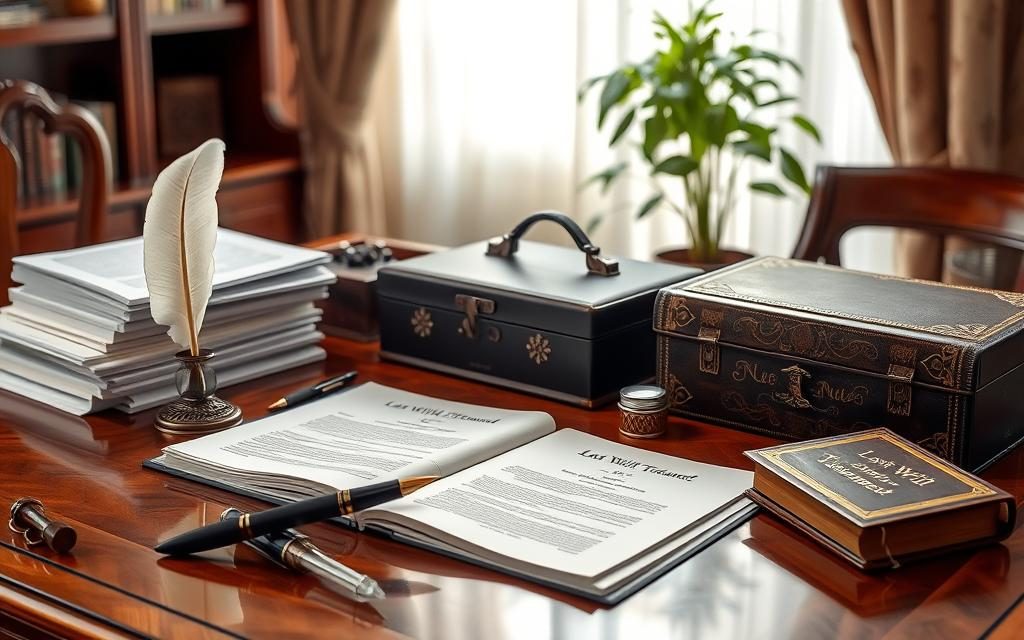
It’s also important to review and update your will often. Life changes mean you might need to change your will. The government says to update it every five years or after big life events. This way, you keep your documents safe and your wishes clear for your loved ones.
When to Update Your Will
Estate planning is a process that needs regular checks. Your will should match your life’s changes. It’s key to update your will often to keep it current.
Life Events Requiring Updates
Big life events like getting married, divorced, or having a child need a will update. Also, if you buy or sell big assets, update your will.
- Marriage or divorce
- Birth or adoption of a child
- Death of a beneficiary or executor
- Significant changes in asset ownership
- Relocation to a different state or country
- Changes in tax laws or personal finances
- Health diagnosis or retirement
Amendment Process
You can update your will with a new one or a codicil. A codicil is an update to your old will. Both need legal witnesses and signatures to be valid.
Tell everyone about your will updates. Let your executor, beneficiaries, and others know. This makes passing on your assets easier and clearer.
Don’t delay in updating your will. Experts say to check it every three to five years. A good estate plan is flexible and protects your loved ones.
Common Estate Planning Mistakes to Avoid
Even a small mistake in estate planning can hurt your loved ones a lot. Not having a will is a big mistake. Only about one in three people have a will or any estate planning documents.
This means their stuff might go to others, not who they want. State laws decide who gets what, not their wishes.
Another big mistake is not updating your plan after big life changes. This includes getting married, divorced, having kids, or getting new stuff. About 25% of people without a will say they don’t plan to make one.
More than 40% say they’ll make a will when they get really sick. But, it’s important to check and update your plan often. This makes sure it matches your current life and wishes.
Ignoring taxes and planning for long-term care are also big mistakes. Not planning how to transfer assets or thinking about estate taxes can hurt your family’s money. It can also leave your wishes unfulfilled.
By planning for these things, you can protect your legacy. You can also make sure your loved ones are taken care of.