

Learn what is a warranty deed, how it protects property buyers, and the key differences between warranty deed types. Essential guide for secure real estate transfers.
In the world of real estate, the warranty deed is key. It protects the buyer’s rights. But what is it, and why is it important? Let’s explore this guide to learn more.
Key Takeaways
- A warranty deed is a legal document that guarantees the buyer that the seller has a clear title to the property without any outstanding liens or claims.
- General warranty deeds offer the most protection for buyers, ensuring the property is free of any encumbrances or title issues.
- Warranty deeds provide specific legal covenants that outline the grantor’s obligations and the grantee’s rights regarding the property.
- The warranty deed must be properly executed, notarized, and recorded to be legally binding and enforceable.
- Understanding the different types of warranty deeds and their implications is important for smart real estate choices.
Understanding Warranty Deeds: A Comprehensive Overview
A warranty deed is a key legal document in property deals. It has important parts like who sold and who bought the property, a detailed description of the property, and legal promises. This deed helps protect buyers from problems with the property’s ownership.
Basic Components of a Warranty Deed
At the heart of a warranty deed are a few main things:
- Grantor and Grantee Information: The deed shows who sold and who bought the property, with their contact info.
- Property Description: It gives a full description of the property, like where it is, how big it is, and what makes it special.
- Legal Statements: The deed has legal promises, like warranties and covenants, that explain the seller’s guarantees and the buyer’s rights.
Legal Framework and Protection
The warranty deed is a strong legal tool that protects buyers. It makes sure the property is clear of any issues that could affect the buyer’s ownership. This gives buyers confidence in their investment and helps solve any future problems.
Role in Property Transactions
In property deals, the warranty deed is very important. It makes sure the property is transferred from the seller to the buyer smoothly and legally. It also protects the buyer from title problems or disputes, making the purchase safer. Plus, it helps the seller by fixing any title issues that come up during the deal.
What Is a Warranty Deed and Its Importance
A warranty deed is a promise from the seller. It says the property is free from any claims or liens. This deed is key in real estate deals, protecting both sides.
The warranty deed definition means the seller promises the property is theirs to give. This makes the buyer feel safe and helps prevent future problems.
The property warranty deed makes sure the buyer gets a property with no hidden issues. This is important for the buyer’s peace of mind. It also helps the seller fix any title problems before the sale.
The real estate warranty deed is very important. It makes sure both sides are safe in a property deal. It’s a promise of clear ownership, building trust and security.
Experts say general warranty deeds are mostly used in home sales. Most lenders need them for financed properties. Special warranty deeds are for temporary owners, like banks after a foreclosure. Quitclaim deeds are for situations where ownership isn’t the main goal, like in divorces or business transfers.
Key Elements of Property Transfer Documentation
Property transfers need a special document called the warranty deed. It has important parts that make the transfer legal and safe. This protects both the seller and the buyer.
Grantor and Grantee Information
The warranty deed must show who is selling and who is buying. This is key to making the deal real and right.
Property Description Requirements
The deed must describe the property well. It should say where it is, how big it is, and its borders. A surveyor often checks this to make sure it’s right.
Legal Language and Terminology
The deed uses special words to say the seller is giving clear title to the buyer. This makes the deal safe and legal.
| Deed Type | Level of Protection | Common Usage |
|---|---|---|
| General Warranty Deed | Highest | Most real estate transactions |
| Special Warranty Deed | Limited | Commercial real estate transactions |
| Quitclaim Deed | Least | Transfers between family members or to clear title issues |
Knowing about the warranty deed helps make sure property transfers are done right. It keeps everyone’s rights safe.
Types of Warranty Deeds Explained
There are mainly two types of warranty deeds in real estate: general warranty deed and special warranty deed. It’s important for buyers and sellers to know the differences. This ensures they are protected when transferring property.
General Warranty Deed: Complete Coverage
A general warranty deed gives the buyer the most protection. It says the property has no liens or legal problems, ever. The seller must fix any issues that come up, protecting the buyer’s money.
Special Warranty Deed: Less Protection
A special warranty deed offers less protection. It only promises the property is okay during the seller’s time. It doesn’t cover the whole history of the property, giving less peace of mind to the buyer.
| Warranty Deed Type | Level of Protection | Coverage Period |
|---|---|---|
| General Warranty Deed | Highest | Entire Property History |
| Special Warranty Deed | Limited | Seller’s Ownership Period |
It’s key to know the difference between warranty deed vs general warranty deed and special warranty deed. Buyers should pick the right protection for their needs. By looking at the deed terms, buyers can protect their investment.
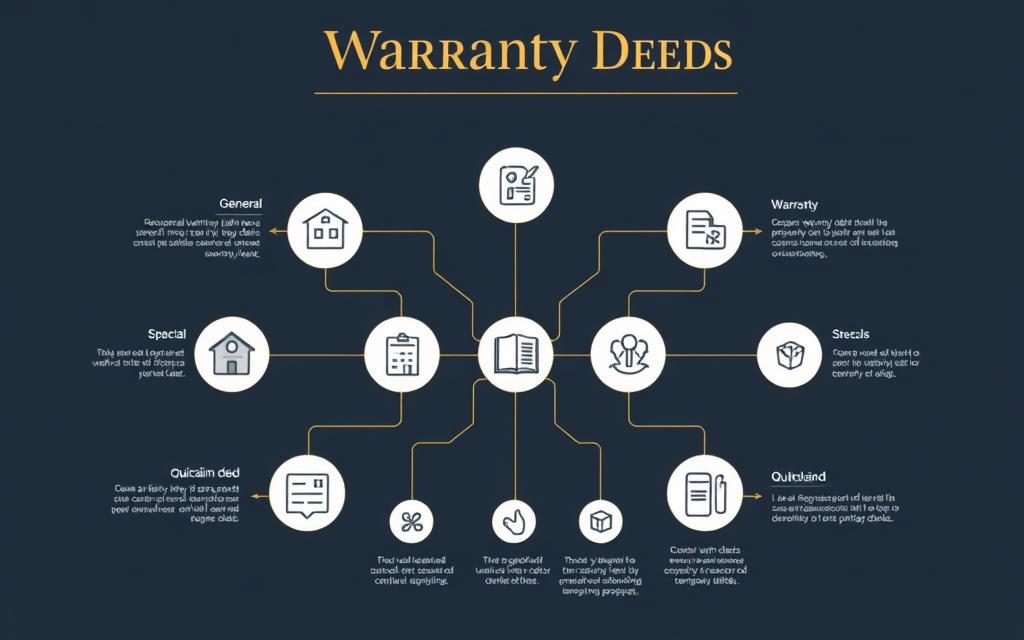
General Warranty Deed: Maximum Protection
The general warranty deed is the best protection for buyers in real estate. It has special promises that protect the buyer. These promises help keep the buyer safe from any problems with the title, no matter when they happen.
Covenants and Guarantees
A general warranty deed has important promises. These promises show the seller owns the property and it has no problems. The promises include:
- Covenant of seisin: Shows the seller owns the property.
- Covenant against encumbrances: Says there are no liens or restrictions.
- Covenant of further assurance: Helps make the buyer’s title perfect.
- Covenant of quiet enjoyment: Keeps the buyer safe from future problems.
- Covenant of warrant and defense: Protects the buyer from hidden title problems.
Legal Rights and Obligations
The general warranty deed also explains the rights and duties of both sides. This makes the deal clear and smooth. It’s the best choice for most real estate deals because it offers strong protection.
| Covenant | Description |
|---|---|
| Covenant of Seisin | Guarantees the grantor’s legal ownership and right to convey the property |
| Covenant Against Encumbrances | Assures the absence of any liens, restrictions, or other encumbrances on the property |
| Covenant of Further Assurance | Obligates the grantor to assist in perfecting the buyer’s title |
| Covenant of Quiet Enjoyment | Protects the buyer against any future disturbances to their ownership |
| Covenant of Warrant and Defense | Defends the buyer against any latent title deficiencies |
Special Warranty Deed: Limited Protection
A special warranty deed, also known as a limited warranty deed, gives less protection than a general warranty deed. It doesn’t promise the title is perfect like a general warranty deed does. Instead, it only protects against title problems that happened while the seller owned the property.
The special warranty deed makes two main promises:
- Covenant against grantor’s acts: The seller says they didn’t mess up the title while they owned it.
- Covenant to warrant and defend: The seller promises to protect the title against any problems from their time of ownership.
Special warranty deeds are often used in commercial real estate transactions. They’re good for properties with many previous owners. This is because it’s hard to be sure of the title’s history.
Even though special warranty deeds are accepted everywhere, the rules can differ. Banks and title companies might not want to help with these deeds. This is because the buyer takes on more risk than with a general warranty deed.
In short, a special warranty deed gives less protection to the buyer. It’s better for some commercial deals or when the seller doesn’t want to be responsible for much.
Warranty Deed vs. Quitclaim Deed: Key Differences
Choosing between a warranty deed and a quitclaim deed matters a lot. It’s key to know the differences. This helps make sure the property transfer goes smoothly and safely.
Protection Levels
The main difference is in protection. A warranty deed guarantees the seller owns the property. It promises the title is clear. On the other hand, a quitclaim deed just transfers what the seller has, without any promises.
Common Usage Scenarios
- Warranty deeds are for regular property sales. Buyers want a clear title, and sellers are sure of their rights.
- Quitclaim deeds are for non-sales like divorce or inheritance. They change who owns the property without title guarantees.
Choosing between a warranty deed vs. quitclaim deed depends on the situation. Legal experts can help pick the right one. This protects everyone’s interests.
Legal Requirements for Warranty Deed Creation
Making a warranty deed needs careful steps. It must have the right names, property details, and promises. It also needs a date and a notary’s stamp. Using the right forms and words is key to follow the law.
To make a warranty deed right, you need to include:
- Grantor and Grantee Information: The full legal names and addresses of both the seller (grantor) and the buyer (grantee) must be clearly stated.
- Property Description: A detailed and accurate description of the property being transferred, including the street address, legal description, and any relevant identifying information.
- Granting Clause: A clear statement that the grantor is transferring the property to the grantee.
- Warranty Covenants: Specific promises or guarantees made by the grantor, such as that they have a valid title to the property and that it is free from any encumbrances or claims.
- Signatures and Notarization: The warranty deed must be signed by the grantor in the presence of a notary public, who will then authenticate the signatures.
- Filing and Recording: The completed and signed warranty deed must be filed with the appropriate county or state registrar’s office to make the property transfer legally enforceable.
Following these steps makes a warranty deed valid. It makes sure the property change is clear, safe, and follows the law for both sides.
Essential Steps in Property Transfer Process
The property transfer process has key steps for a smooth and legal change. You need to prepare documents, file them, and record them. This makes the property transfer legal.
Document Preparation
First, get the right state-specific warranty deed form. Fill it out with all needed info like who owns it now and who will own it. You also need to write down the property’s legal details and sign it.
Both the person giving the property and the one getting it must sign. They usually sign in front of a notary public.
Filing and Recording Procedures
The last step is to file the deed with the county registrar’s office. This is key to make the warranty deed filing official. It makes sure the property change is recorded and recognized.
By following these steps, you make sure the property transfer is legal and safe. It gives everyone peace of mind and protects their rights.
Title Search and Property Verification
Transferring property ownership starts with a title search. It checks public records to see if the seller can legally sell the property. It also finds any problems or mistakes in the property’s history.
This careful check makes sure the deed is correct. It protects the buyer and the lender.
Property verification also includes a survey. This survey checks the property lines and finds any problems. It makes sure the property is as expected.
Due diligence is very important. Title search and property verification keep everyone safe. They make sure the property transfer is smooth and safe.
By doing these checks, buyers can feel more confident. They can go ahead with their real estate plans.
| Key Considerations | Importance |
|---|---|
| Title Search | Verifies the seller’s legal ownership and uncovers any issues or errors in the title history. |
| Property Verification | Includes a professional survey to confirm property boundaries and identify any encroachments or easements. |
| Title Insurance | Protects the buyer and lender from financial loss due to undiscovered title defects. |
| Costs and Timeline | Title search typically costs $75-$200 and takes about 2 weeks, while title insurance is 0.5-1% of the home’s purchase price. |

Common Warranty Deed Mistakes to Avoid
Handling property transfers can be tricky. One wrong move in the warranty deed process can lead to big problems. Knowing the common mistakes helps avoid these issues.
Documentation Errors
Wrong property details, wrong names, and missing legal words are common mistakes. These errors can make the deed invalid and cause big fights later.
Legal Compliance Issues
Not following state rules or not doing the deed right can cause big problems. Not notarizing or filing the deed correctly can make the transfer not legal.
To avoid these mistakes, pay close attention to details. Talk to lawyers and learn about warranty deed rules in your state. This way, you protect your property rights and make the transfer smooth.
Benefits and Limitations of Warranty Deeds
Warranty deeds help both buyers and sellers a lot. Buyers get strong protection against title problems. This means they can sue the seller if there are any issues.
But, warranty deeds have downsides too. Sellers have to keep defending the title forever. This can be scary for sellers, mainly if the property’s history is unclear.
Even with warranty deeds, some title problems might not be covered. That’s why title insurance is a good idea. It adds extra protection for buyers. Together, a warranty deed and title insurance give buyers the best protection.