
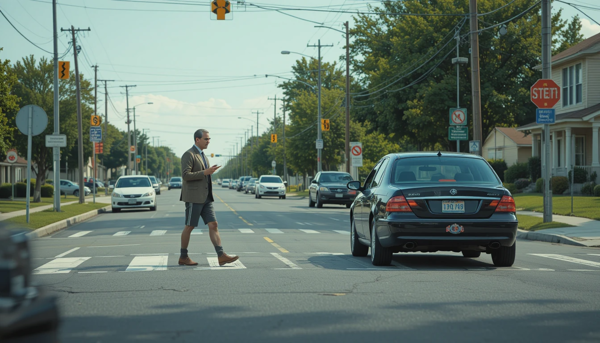
Pedestrian vs car accident—who’s really at fault? Learn how blame is decided, plus your legal rights in these tricky situations.🚶♀️🚗
Is the Driver Always at Fault in a Pedestrian vs Car Accident?
👀 Ever wondered if drivers are always blamed when they hit a pedestrian? It’s a common belief—but the truth might surprise you.
Let’s set the record straight: No, the driver is not always at fault in a pedestrian vs. car accident. While drivers do carry a higher duty of care, fault is determined based on the unique circumstances of each case.
We’re diving deep into how responsibility is assigned in these accidents—what matters most, what the law says, and what to do if you’re ever involved. Let’s break it down in simple terms.
🚦 Understanding the Legal Basics
When a pedestrian and a car collide, it’s usually assumed the driver is at fault. But legally, that’s not always the case.
Fault depends on:
- Whether the pedestrian had the right-of-way
- If the driver was distracted or impaired
- Road and weather conditions
- Speed and reaction time
- Local traffic laws
Both drivers and pedestrians must follow traffic rules. A jaywalking pedestrian can be just as responsible as a speeding driver.
🚸 Do Pedestrians Always Have the Right-of-Way?
Not exactly.
Many people believe pedestrians can cross anytime, anywhere. That’s not true in most states. Pedestrians only have the right-of-way in marked crosswalks and intersections.
📝 Quick facts:
- Outside of crosswalks, pedestrians must yield to cars.
- Pedestrians must obey traffic signals just like drivers.
- Crossing against a red light? You may be at fault.
⚖️ What “Duty of Care” Means for Drivers
Drivers are expected to act with reasonable care. That means watching for pedestrians, stopping at crosswalks, and avoiding distractions like texting or speeding.
If a driver violates this duty, they can be held responsible—even if the pedestrian made a minor mistake.
“Courts look at whether the driver could have avoided the accident—even if the pedestrian was careless.”
📉 Can Pedestrians Be At Fault?
Yes! Pedestrians can absolutely be found fully or partially at fault. This is where terms like comparative negligence and contributory negligence come into play.
Pedestrians may be at fault if they:
- Cross the street while texting or distracted
- Ignore “Don’t Walk” signals
- Step into traffic suddenly without warning
- Are intoxicated while walking
⚖️ Comparative Negligence Laws by State
Here’s a quick guide to how different states handle shared fault:
| State Type | What It Means |
|---|---|
| Pure Comparative | Pedestrian can recover damages, even if 99% at fault |
| Modified Comparative | Recovery allowed only if pedestrian is <50–51% at fault |
| Contributory | No recovery if pedestrian is even 1% at fault |
Examples:
- California: Pure comparative negligence
- Texas: Modified (51% rule)
- Virginia: Contributory negligence
⚠️ These laws dramatically affect how much compensation a pedestrian can receive.
🚓 What Happens After a Pedestrian Accident?
If you’re involved in an accident—whether driver or pedestrian—what you do next matters.
Steps to take immediately:
- Call 911 and seek medical attention.
- Do not admit fault on the scene.
- Collect witness statements and photos.
- Request a copy of the police report.
- Contact an attorney ASAP.
📋 How Police Determine Fault
Police officers at the scene will look at:
- Skid marks
- Witness statements
- Surveillance footage
- Position of the car and pedestrian
- Traffic signals and signs
🛑 But remember: The police report is not final. Insurance companies and courts may make different fault determinations later.
📷 Using Evidence to Prove Fault
Whether you’re the driver or pedestrian, evidence is key.
What helps your case:
- Dashcam footage 🎥
- Street camera video
- Medical records
- Cell phone records (to prove distraction)
- Photos of injuries or the scene
🤕 Common Injuries in Pedestrian-Car Accidents
Pedestrians often suffer more serious injuries, including:
| Injury Type | Severity | Recovery Time |
|---|---|---|
| Broken Bones | Moderate–Severe | 6–12 weeks |
| Traumatic Brain Injury | Severe | Months–Years |
| Spinal Cord Damage | Critical | Ongoing |
| Soft Tissue Injuries | Mild–Moderate | 2–6 weeks |
Even low-speed impacts can cause long-lasting trauma for pedestrians.
🧠 Mental & Emotional Toll
Let’s not forget the psychological impact. Even if physical injuries heal, trauma can linger—for both the pedestrian and the driver.
Symptoms can include:
- Anxiety while walking or driving
- Depression or guilt
- Flashbacks or PTSD
It’s okay to seek mental health support after an accident.
💼 When Should You Contact an Attorney?
Always consult an attorney if:
- Injuries are serious or long-term
- There’s a dispute over fault
- You’re dealing with insurance complications
An experienced personal injury lawyer can help negotiate compensation, navigate legal issues, and protect your rights.
💰 What Compensation Can Pedestrians Receive?
Depending on fault, a pedestrian may be entitled to:
- Medical expenses 🏥
- Lost wages 💼
- Pain and suffering 😣
- Long-term rehab costs 🧑⚕️
- Emotional distress therapy 💬
Insurance companies may try to lowball you, so don’t settle too quickly.
🤝 Can Both Driver and Pedestrian Be At Fault?
Yes—and it’s very common. In many cases, both parties share the blame.
Example:
- A pedestrian jaywalks while texting 📱
- A driver is going slightly over the speed limit 🚗💨
In such cases, compensation is reduced based on percentage of fault.
🧾 Role of Insurance Companies
Insurance adjusters will:
- Investigate the accident
- Review police reports
- Assess injuries and damages
- Offer a settlement (usually low)
⚠️ You don’t have to accept the first offer!
Having a lawyer can help you push back and get what you truly deserve.
🛡️ Tips to Avoid Pedestrian Accidents
For drivers:
- Always check crosswalks
- Slow down in school zones 🚸
- Avoid distracted driving 📵
For pedestrians:
- Use crosswalks only
- Don’t cross while texting
- Make eye contact with drivers before crossing
🧠 Safety is a shared responsibility.
🔄 Changing the Narrative Around Fault
The belief that “the driver is always wrong” is outdated. Fault depends on facts, not feelings.
Understanding your rights and responsibilities—whether on foot or behind the wheel—can save lives and protect futures.
✅ Conclusion: So, Who’s Really at Fault?
Let’s recap.
Drivers are not automatically at fault in pedestrian accidents. The law looks at each case individually. It considers who had the right-of-way and who was distracted.
Whether you’re walking or driving, staying alert and following the rules can prevent tragedy. Knowing how fault is determined can help you make smart legal and financial decisions.
Stay safe out there. 🚶♀️🚗
🙋♂️ FAQs: Pedestrian vs Car Accident
Can a jaywalker sue if hit by a car?
Yes, but their compensation may be reduced due to shared fault laws.
Who pays medical bills in pedestrian accidents?
Typically, the driver’s insurance—but it depends on state laws and fault.
What if the pedestrian was intoxicated?
They can sue, but intoxication may reduce or eliminate compensation.
Do crosswalks guarantee right-of-way?
Only if pedestrians follow signals and don’t suddenly dart into traffic.
Can a pedestrian be sued for causing a car crash?
Yes, if their actions caused injury or property damage.


